The Clause That Follows You Home: Reading the J-1 Two-Year Requirement Before You Build a Life Here
Photo: Florante A. Cruz, CC BY-SA 4.0, via Wikimedia Commons
Few immigration provisions are as quietly consequential as the one printed in the corner of a J-1 visa. It is short, it is often annotated with nothing more than the citation 212(e), and it can remain dormant for years before surfacing at exactly the wrong moment — a change-of-status request, an H-1B registration, or a green card filing.
This guide explains what the requirement is, where to find it, and what to do if you discover it late. It is general information, not legal advice; individual cases turn on program documents and country-specific facts.
A Requirement Hidden in Plain Sight
Section 212(e) of the Immigration and Nationality Act provides that certain exchange visitors — and their J-2 dependents — must reside and be physically present in their country of nationality or last legal permanent residence for an aggregate of two years before becoming eligible for specific immigration benefits.
The requirement is not a punishment, and it is not a bar to remaining in the United States for the duration of a program. It is a condition attached to a category of exchange, and it activates when the visitor later seeks certain statuses.
Three Triggers
An exchange visitor is subject to the requirement if any one of the following applies:
- Government funding. The program, or the visitor, received funding from the U.S. government, the visitor's home government, or an international organization of which the United States is a member — for the purpose of the exchange.
- The Exchange Visitor Skills List. The visitor's specialized knowledge or skill appears on the Skills List for their country of nationality or last residence. The list is country-specific and has been revised only a handful of times; verify the version currently in effect for your country rather than relying on what a friend was told.
- Graduate medical education. The visitor came to receive graduate medical education or training.
Many visitors are surprised to learn that a modest stipend routed through a government source, or a home-country scholarship that covered airfare, can be enough to trigger the requirement even when the program itself was privately arranged.
Where to Look in Your Own Paperwork
Start with documents you already have:
- The visa foil. A 212(e) annotation is often printed directly on the visa.
- Form DS-2019. The certificate of eligibility contains a section addressing whether the visitor is subject to the two-year residence requirement, with the applicable basis noted.
- The program sponsor's records. Sponsors track this determination and can usually restate the basis in writing.
- The arrival record and any later correspondence from the Department of State or USCIS referencing 212(e).
Keep every DS-2019 you were ever issued, including ones for subsequent programs, transfers, and extensions. Reconstructing a decade of exchange history from memory is far harder than keeping a folder.
What It Actually Blocks
A person subject to 212(e) who has not fulfilled the requirement and has not obtained a waiver is ineligible for:
- an immigrant visa or adjustment of status to permanent residence;
- an H nonimmigrant visa, including H-1B; and
- an L nonimmigrant visa.
It does not require the visitor to leave the United States when the program ends, and it does not automatically invalidate a current status. It creates a problem at the next step, which is why it is so often discovered late — by a prospective employer's attorney, in March, during registration season.
Other classifications may be reachable in some circumstances, but the analysis is fact-specific and consular officers retain discretion. This is not a question to resolve by reading forum posts the week before a filing.
When the Paperwork Disagrees
Visa annotations, DS-2019 forms, and sponsor records occasionally conflict. When they do, the Department of State's Waiver Review Division can issue an advisory opinion — a formal determination of whether the requirement applies. Advisory opinions take time, so request one as soon as a conflict appears rather than after a job offer arrives.
The Waiver Categories
A waiver is available on four grounds, each with its own logic and its own evidentiary burden:
No objection statement. The visitor's home government informs the Department of State that it does not object to a waiver. This is unavailable where the exchange was funded by the U.S. government, and there are special restrictions for physicians in graduate medical education.
Interested government agency request. A U.S. federal agency, or a designated state health agency in the case of physicians, requests a waiver in the public interest.
Exceptional hardship. A waiver may be granted where departure would impose exceptional hardship on a U.S. citizen or permanent resident spouse or child. The standard is demanding and requires documented evidence, not general assertions of difficulty.
Persecution. A waiver may be available where return would subject the visitor to persecution on a protected ground, or where the visitor fears torture upon return.
Each route has its own forms, fees, and processing timelines, and several require the home government's cooperation, which cannot be accelerated from Washington.
Fulfilling the Requirement Instead
Many visitors simply satisfy the requirement. The two years must be spent physically present in the country of nationality or last legal permanent residence, and the periods may be aggregated rather than consecutive. Time spent elsewhere — including time back in the United States on another status — generally does not count.
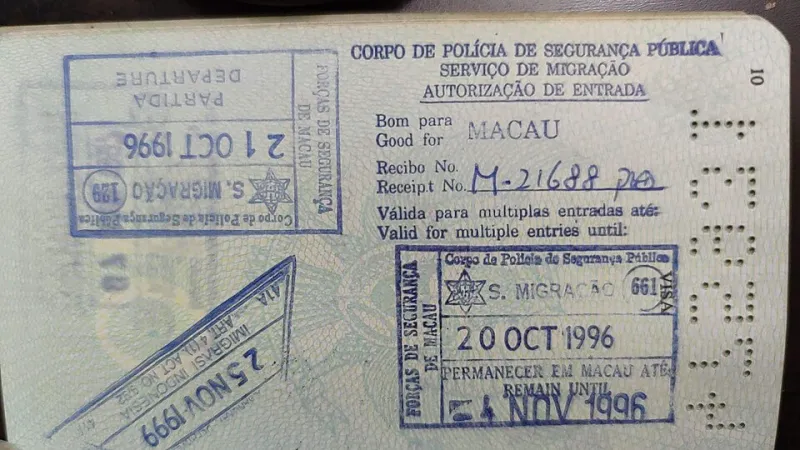
Document the presence as you go: passport entries and exits, employment letters, leases, tax records, and any registration with local authorities. A requirement fulfilled but poorly documented can consume months in proving.
Timing Mistakes That Surface Years Later
- Assuming the obligation expires. It does not. It waits.
- Confusing 212(e) with the separate repeat-participation bars that apply to some J-1 categories. They are different rules with different consequences.
- Assuming a later F-1 or B-2 admission resets anything. It does not.
- Registering for the H-1B lottery before confirming whether a waiver is needed.
- Leaving the United States and assuming departure alone satisfies the requirement. Returning home is not the same as residing there for two years in the eyes of the statute.
- Starting a green card process without disclosing the requirement to counsel.
A Short Checklist
Find your DS-2019 forms and your visa. Note whether 212(e) is marked and on what basis. If the basis is the Skills List, check the current list for your country. If anything is unclear, request an advisory opinion early. If a waiver seems necessary, identify which of the four categories fits and what your home government must do. Then build a calendar backward from the date you will actually need the benefit — not forward from the day you notice the problem.
The two-year rule is not a trap. It is a clause that was disclosed, in small print, at the beginning. Reading it early is the whole of the defense.