Stamps, Seals, and Stumbling Blocks: Your 2026 Guide to Foreign Civil Documents
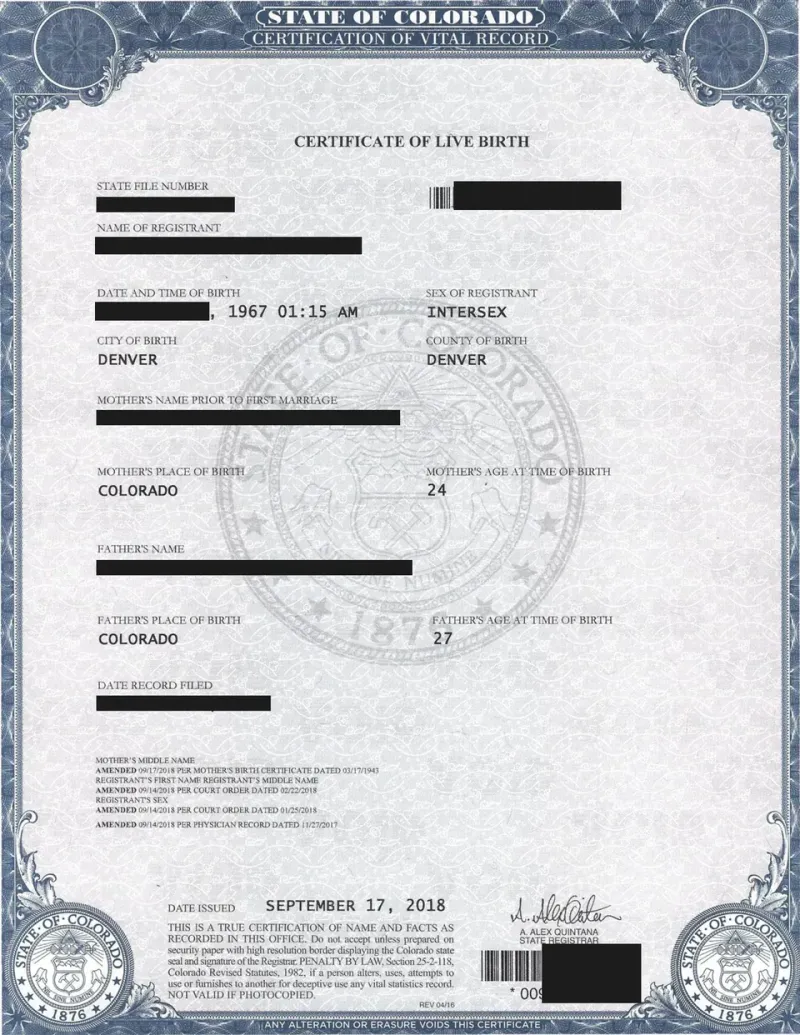
Photo: State of Colorado, Public domain, via Wikimedia Commons
A foreign birth certificate arrives with a raised seal, a ribbon, and a stamp that looks official. The translation is attached. The filing goes out. Weeks later, a Request for Evidence arrives anyway. The problem is rarely that the document is fake. More often, one link in a chain of authentication, translation, and cross-checking was missing, and the adjudicator cannot tell whether the record is what it claims to be.
US immigration filings routinely require civil documents from another country. The rules are not mysterious, but they are layered. A certified copy is not the same as an apostille. An apostille is not the same as consular legalization. A translation is not automatically a certified translation. Understanding those distinctions is the difference between a clean filing and a costly round of correspondence.
Separate the record from the authentication
Start with the document itself. A birth certificate, marriage certificate, divorce decree, or police record must ordinarily be a certified copy issued by the office that holds the original record. A photocopy of a certified copy is usually not enough. A decorative ceremonial certificate from a hospital or religious institution may not substitute for the civil registration document.
Authentication comes next, and it answers a narrow question: did the public official who signed the record actually hold that office? An apostille is one form of authentication. It is available for documents from countries that are parties to the Hague Apostille Convention. A consular legalization chain is the alternative for documents from countries that are not parties, or for documents that fall outside the convention's scope.
The apostille does not certify that the birth certificate is accurate. It does not translate the text. It does not decide whether the document satisfies a particular immigration form. It authenticates a signature and a seal. Treat it as one link in the chain, not the whole chain.
The apostille is not universal
A common 2026 filing mistake is assuming that every foreign document can be apostilled. Check the issuing country's status under the Hague Apostille Convention as of the date of filing. Status can change, and some countries have territorial limitations or objections that affect particular documents.
If the issuing country is not a party, the document may need a sequence of authentications: first by the foreign ministry or another designated authority in the issuing country, then by the US embassy or consulate with jurisdiction. The exact order and offices vary by country. A document authenticated in the wrong sequence can be rejected even if every stamp is genuine.
Some records are issued by local registrars rather than national authorities. In those cases, the apostille or legalization may need to come from a regional office that authenticates the local official's signature. The instructions for the specific country matter more than a general internet summary.
Translation: complete, certified, and legible
A certified translation is not merely a translation with a notary stamp. For US immigration purposes, the translator must provide a signed statement attesting to competence in both languages and to the accuracy of the translation. The statement should identify the translator, include contact information, and be dated. Notarization is sometimes requested but is not a substitute for the translator's certification.
The translation must be complete. That includes seals, stamps, handwritten notes, marginal comments, page numbers, and the reverse side of a document if it contains text. A summary translation or a translation that omits the registrar's annotations can trigger an RFE because the adjudicator cannot compare the English text to the original.
Names and dates must be translated consistently. If the birth certificate uses a patronymic, a transliteration variant, or a date format that differs from the petition, explain the discrepancy in a cover letter rather than leaving the adjudicator to guess. A translation that is accurate but inconsistent with the rest of the file still creates doubt.
Document-by-document checklist
Birth certificates
Obtain a certified copy from the civil registrar, not a hospital souvenir certificate. Check whether the long form or short form is required, and whether the form asks for parents' names. If the certificate was amended, include the amendment record or explain the change. Authenticate the document if the filing instructions require it, then translate every page and annotation. Confirm that the name on the certificate matches the name on the petition, or document the reason for any difference.
Marriage certificates
Use the civil marriage record. A religious ceremony certificate alone may not prove a legally registered marriage. If the document is from a country that issues a marriage booklet, include the pages that show the registration, not just the cover. Authenticate and translate the complete record. If there was a prior marriage, the divorce or death record for that marriage will also be needed.
Divorce decrees
Submit the final decree, not the complaint or the summons. If the decree is conditional or subject to an appeal period, include proof that it became final. Authenticate the decree if required, and translate the entire document, including the judge's signature block and any custody or property provisions that affect the immigration question. For multiple prior marriages, provide a complete chain of decrees.
Police records
Police certificate requirements vary by country and by the immigration benefit sought. Pay attention to the age threshold, the period covered, and the countries of residence that trigger a record. Some countries require a record only for periods over a certain length; others issue a single national certificate. Check whether the certificate must be recent, and whether the issuing authority requires a request letter from US Citizenship and Immigration Services or the Department of State. Authenticate and translate according to the instructions for that country, and keep a copy of the request receipt.
Where requests for evidence come from
Most document-related RFEs trace back to a short list of problems. The apostille is missing, expired, or from the wrong authority. The translation is incomplete or lacks a proper translator certification. The document is a photocopy rather than a certified copy. The name on the record does not match the name on the form. The filing includes a marriage certificate but not the divorce decree that ended a prior marriage. The police record covers the wrong period or the wrong country.
None of these problems is exotic. They are ordinary assembly errors, and they are easier to prevent than to cure after a deadline.
A practical assembly order
First, read the instructions for the specific form and benefit. Requirements for an adjustment of status filing are not identical to those for a consular processing case or an asylum application. Second, obtain the current certified copy from the issuing office. Third, determine whether an apostille or a consular legalization chain is required, and use the correct office. Fourth, commission a complete certified translation. Fifth, cross-check every name, date, and place against the rest of the filing. Sixth, keep the original authenticated document and a full copy of the translation in your own records.
Processing times for apostilles and consular legalization vary widely. Build the document assembly into the filing timeline rather than treating it as a last step.
This guide is general information, not legal advice. Requirements change, and country-specific rules can be technical. When a filing depends on a foreign record with an unusual history, an accredited representative or immigration attorney can help confirm the authentication chain before the package goes out.